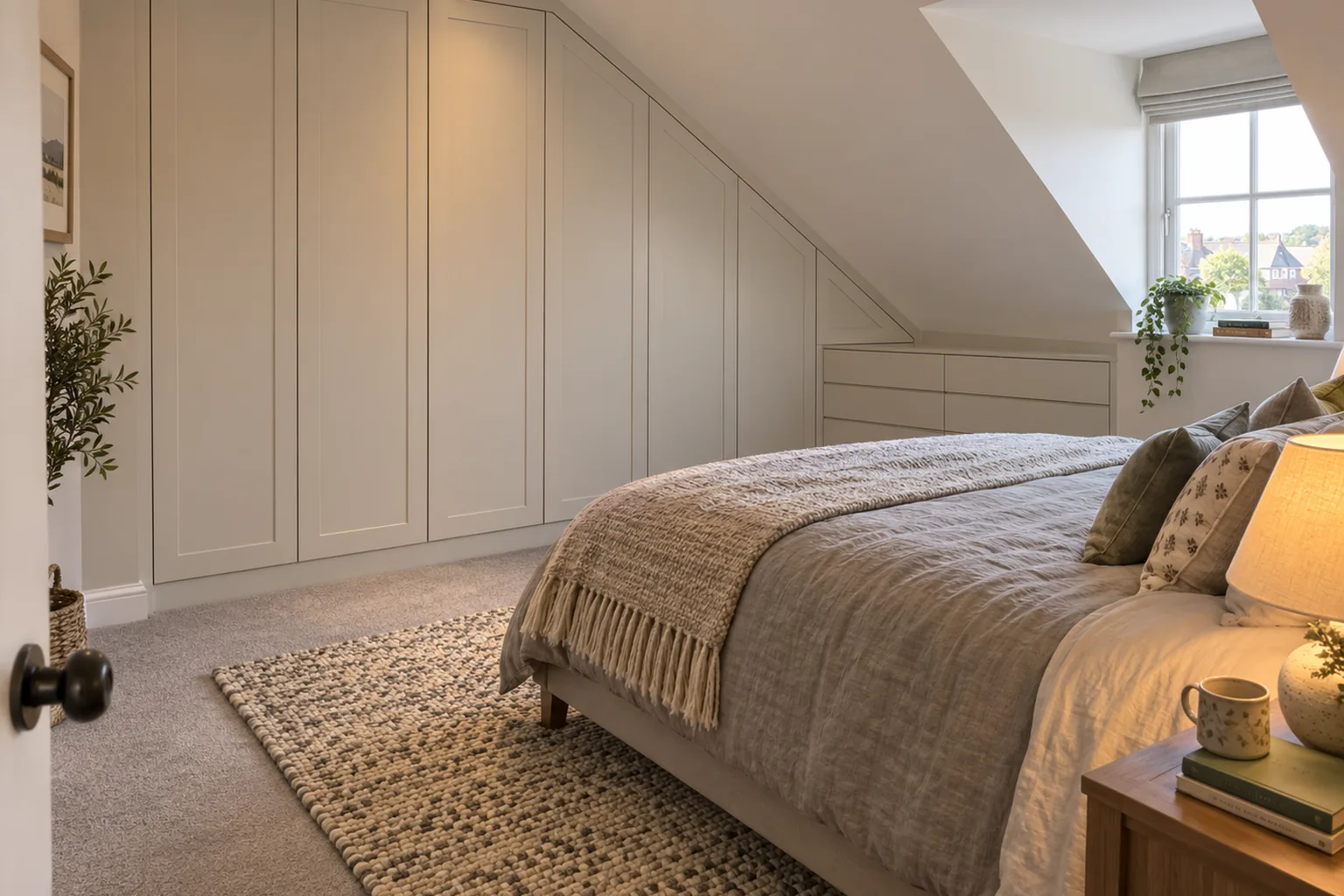
Sloping Ceiling Wardrobe Cost UK 2026: Loft & Eaves Fitted Wardrobe Prices
Sloping ceiling wardrobes cost £1,500–£5,999 fitted in the UK. Compare ready-made, specialist and import prices for loft and eaves runs, with worked examples.
Read the guideWhat to confirm before ordering kitchen cabinets from China for a UK project: real costs, specifications, quality checks and a simple enquiry pack.

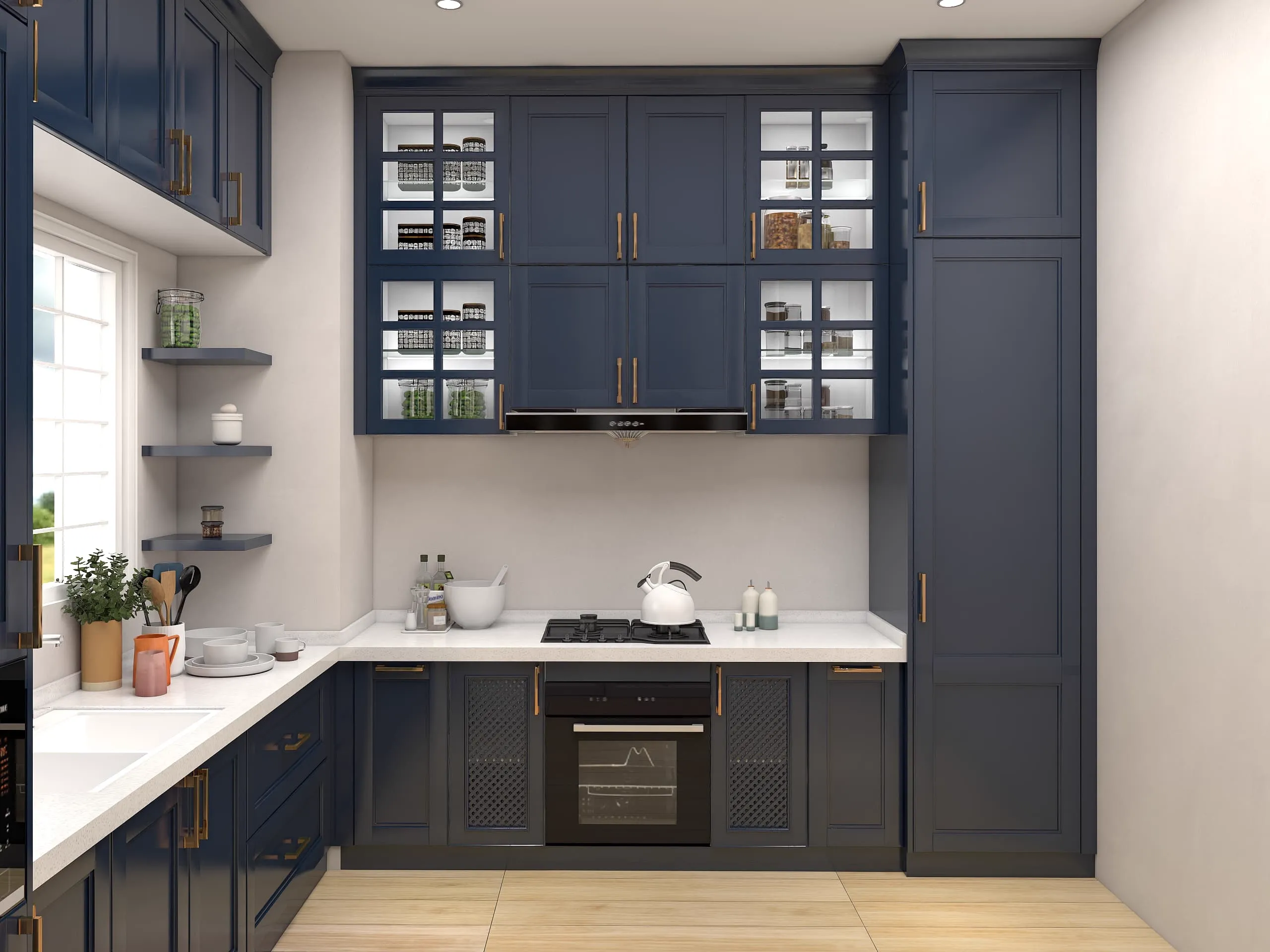
Kitchen cabinets from China are worth considering for a UK project when you want an exact colour and style match, made-to-measure sizes, long-backed after-sales or a multi-room shipment — not simply because a factory price looks lower than a UK showroom quote. British supply is already keenly priced, and a single standard kitchen is often cheaper and faster to buy at home. Where importing earns its keep is specification freedom, guarantees you can hold the supplier to, and consolidation. This guide sets out what to check before you commit: the real cost comparison, the decisions to confirm before you request a quotation, and how quality is controlled when your kitchen is built several thousand miles away.
Key takeaways:
The advantages below are genuine, and each has conditions attached.
Made-to-measure, not a fixed range. UK flat-pack and most retail kitchens are built around standard module widths. Made-to-order cabinets are built around your room dimensions and appliance list, which matters most in period properties with out-of-square walls, unusual ceiling heights or non-standard appliance combinations — exactly the rooms where fixed modules waste space.
Any colour, any style — matched, not approximated. Door colour is matched to your physical sample, paint reference or reference image, not chosen from a fixed palette. Door construction — Shaker, flat-panel, handleless, or a profile taken from your reference — is made to order. A UK range kitchen usually asks you to compromise on colour, style or size; a made-to-order kitchen starts from what you actually want. The condition: choices must be locked through samples and drawings, so the approved specification, not a screen image, defines production.
Edge banding backed by a ten-year guarantee. Edge banding is where budget cabinets fail first: steam, heat and daily knocks work at the seam until it lifts or cracks. George Group uses its own edge-banding process and guarantees it for ten years — if the banding on your cabinets cracks, peels or fails within that period, we replace the affected component with a new one, free of charge. Component-level cover of this length is rarely part of a standard UK kitchen quotation; where extended cover is offered, it is usually priced into the quote. Full terms are confirmed in your order documentation, so you can compare them line by line against any UK guarantee.
After-sales that does not end at the port. An imported kitchen should not mean an unsupported kitchen. Your approved specification, samples and order reference stay on file, so a replacement door or panel can be remade to the original specification — and for edge banding, the ten-year replacement commitment above applies. A claim starts with photographs of the affected part and your order reference.
Coordinated worktops, sinks, taps and hardware. Ordering these with the cabinets means cut-outs, thicknesses and fittings are confirmed as one specification before production, instead of reconciling three separate suppliers on site.
Consolidation with the rest of the project. When cabinets ship together with wardrobes, internal doors or bathroom furniture, freight and clearance costs are shared across the order. For a single small kitchen this advantage disappears; for a whole-home renovation or a multi-property project it is often decisive.
If you are still at the supplier-shortlisting stage, our Canton Fair guide for UK buyers covers how to compare whole-home suppliers before you discuss specifications with anyone.
Published UK prices vary mostly because they measure different things. These anchors were checked on 21 October 2026 unless noted:
| Supply route | Published price | What it covers |
|---|---|---|
| Wren estimator, small kitchen (8 units + 3 appliances) | £3,117–£5,416 supply; £6,689–£8,627 dry fit | Supply with appliances vs Wren's fitting service |
| Magnet, 12-unit kitchen | £4,203–£9,552 | Cabinets only, no installation, worktops or appliances |
| Howdens (trade-only, no public price list) | £4,284.60 for a 12-unit London order | Supply-only; a single third-party trade quotation, not an official rate |
| IKEA METOD, L-shaped shaker kitchen | ≈£4,681 (2024 figures) | Components only, before worktops, appliances and fitting |
| Checkatrade cost guide | £5,250–£28,400 per project; installation £2,200–£4,600 | Fully fitted projects including removal, services and basic appliances |
The lesson is not that one route is cheap and another expensive. It is that cabinets-only, supply-with-appliances and fully-fitted are three different products. Any comparison with an import quotation has to use the same scope on both sides.
For the import side, the landed cost is built up like this:
| Line | Illustrative amount |
|---|---|
| Factory quotation (assumed for illustration only) | £5,000 |
| Sea freight share and insurance | £800 |
| Import duty — 2% on goods (HS 940340) | £100 |
| UK VAT — 20% on goods + freight + insurance + duty (£5,900) | £1,180 |
| Landed, before local delivery and installation | £7,080 |
| Local installation (Checkatrade range) | £2,200–£4,600 |
Two things to note. First, the £5,000 factory figure is an assumption to show the arithmetic, not a quotation — your specification decides the real number. Second, wooden kitchen furniture attracts 2% duty under HS 940340, unlike wooden bedroom furniture at 0% under HS 940350, so figures from wardrobe import guides cannot be reused here. The same landed-cost framework, with different duty lines, is set out in our guide to custom wardrobes from China versus UK joiners.
Sources: Wren online estimator (promotional pricing as displayed, 21 Oct 2026); Magnet via FMB and Which? reviews; Howdens via a published London trade quotation; IKEA component pricing via Fifi McGee (2024); Checkatrade new kitchen cost guide (2026). Full notes in the Methodology.
Most import disappointments start here, not in the factory. A quotation requested before these items are settled is not a price — it is a guess that will be revised later.
| Item to confirm | What to record | Why it matters |
|---|---|---|
| Room dimensions | Wall widths at low, mid and high level; ceiling height | Period walls are rarely square; cabinet runs and scribe allowances depend on it |
| Services | Soil pipe, water, gas and extractor duct positions | Decides sink and hob units, cut-outs and ventilation clearances |
| Appliances | Model numbers and dimensions for every appliance | Tall housings and integrated units are built around specific models |
| Interruptions | Sockets, radiators, boilers, skirting, coving | Prevents cabinets arriving that cannot fit the run |
| Delivery | Postcode, access, parking, floor level | Affects delivery method, handling and the installation plan |
Have your installer verify the final site measurements before drawings are signed off. A factory works from the dimensions it is given; responsibility for site accuracy sits with the project, not the supplier.
| Decision | What to record | Why it matters |
|---|---|---|
| Carcass | Board type and thickness (16–18mm); moisture-resistant board at sink units | Structure, durability and a meaningful share of the price |
| Door construction | Shaker, flat-panel or handleless; framed or slab | Machining time and material use differ widely |
| Finish and edging | Colour, sheen, texture and edge banding, agreed from samples | The approved sample, not a screen image, guides production |
| Hardware | Hinge and drawer specifications, soft-close requirements | Daily feel, future spares and cost |
| Worktops | Material, thickness, edge profile, sink and hob cut-outs | Often the largest single addition to the cabinet price |
| Format | Flat-pack or assembled units | Trades shipping volume against site assembly labour |
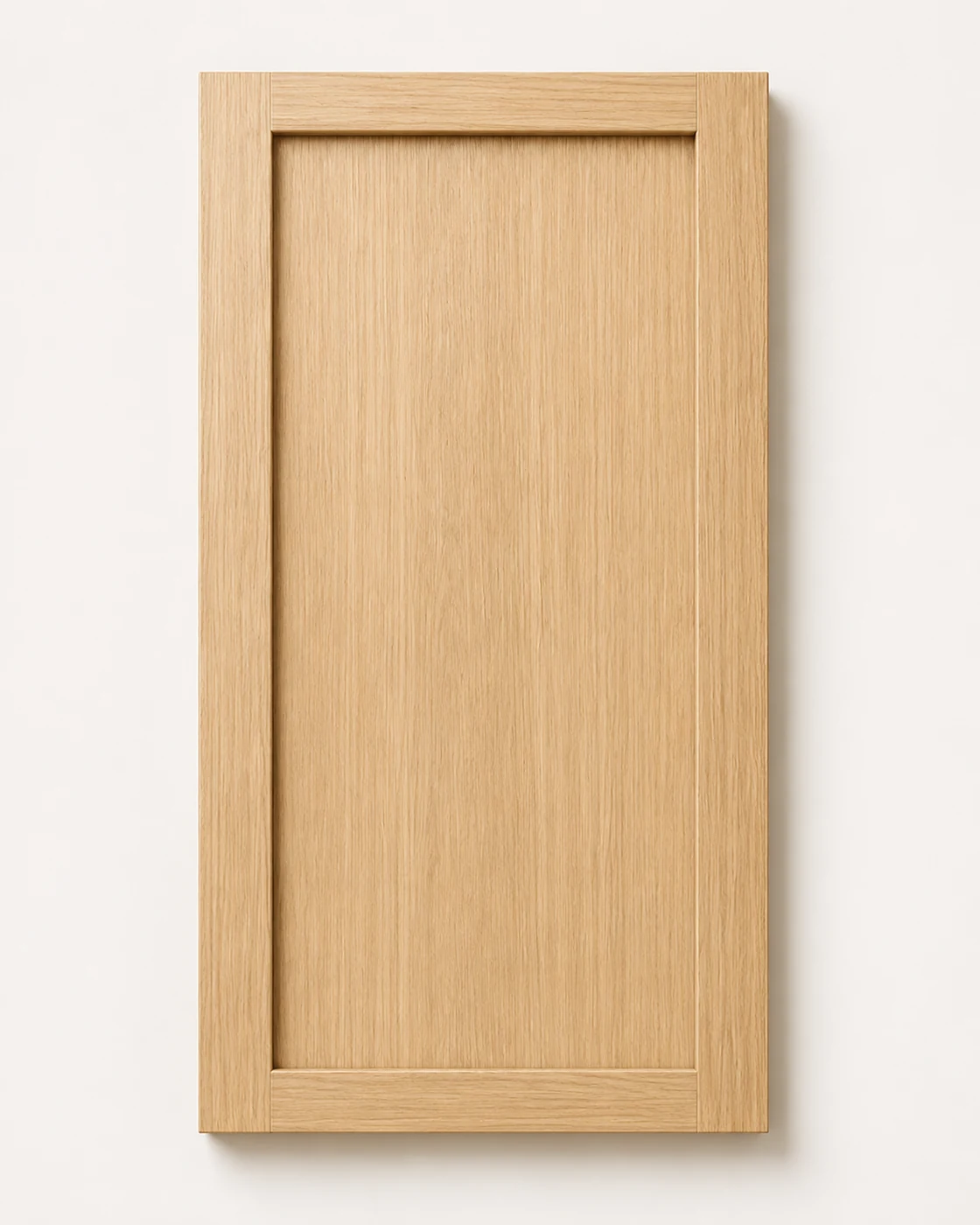
Material reference: door panel and finish samples. Agree the physical sample before production, then record its reference in the specification.
Our made-to-order kitchen cabinets page shows how these decisions come together in a single specification, including worktops and hardware.
"Will the quality be any good?" is the right question, and it has a procedural answer rather than a reassuring one. Four checkpoints, each leaving you something inspectable:
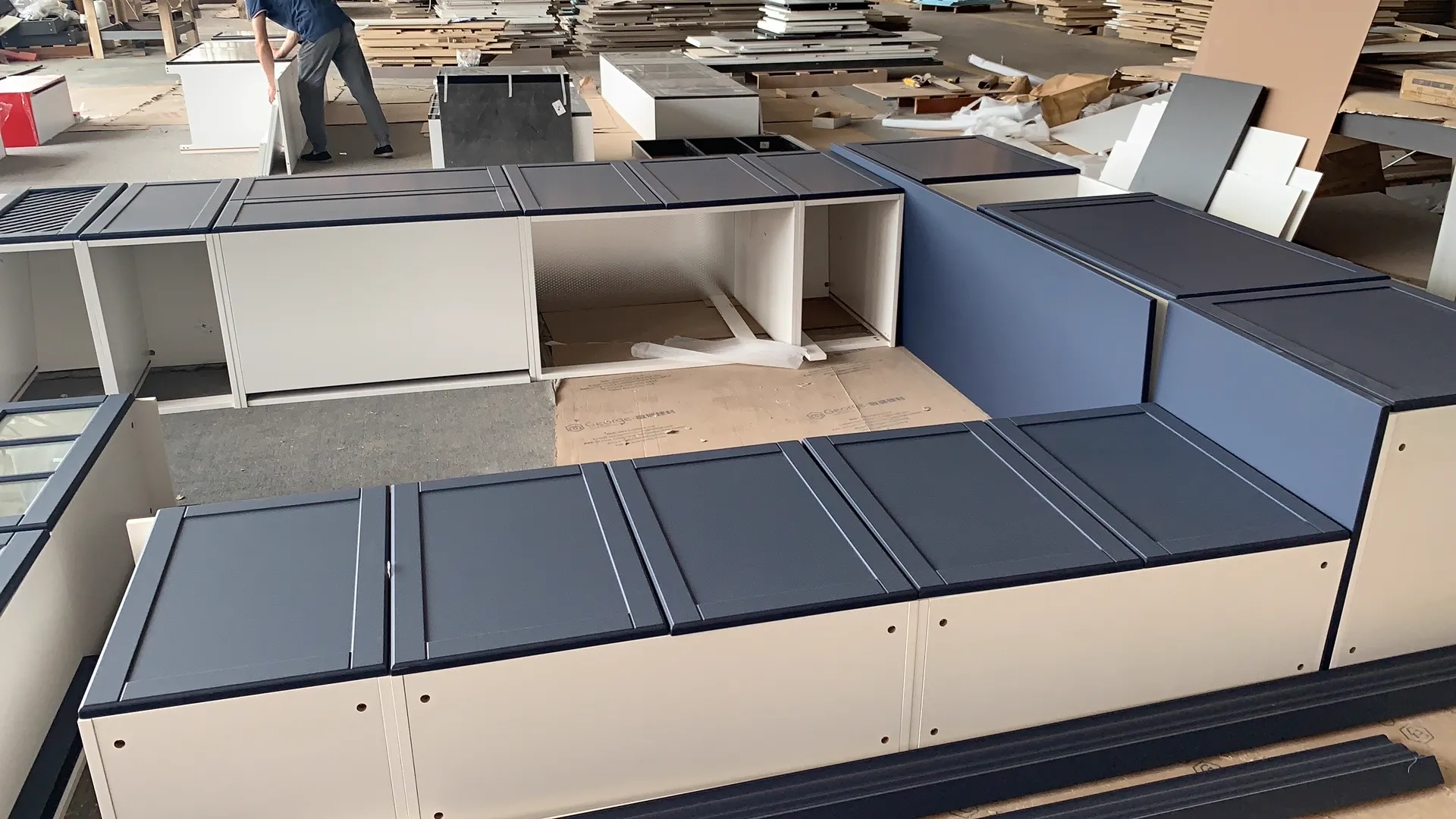
Project reference: a UK Shaker kitchen order being checked against the approved drawings. Checking is done against the signed specification, not against impressions.
Once the checks above are done, everything fits into one pack that a factory can price without guesswork:
If you need help turning a sketch into dimensioned drawings, that is part of our design service. A complete pack is also the best protection against later revisions: changes made on paper cost nothing compared with changes made in production.
Be honest with yourself about these before choosing the route:
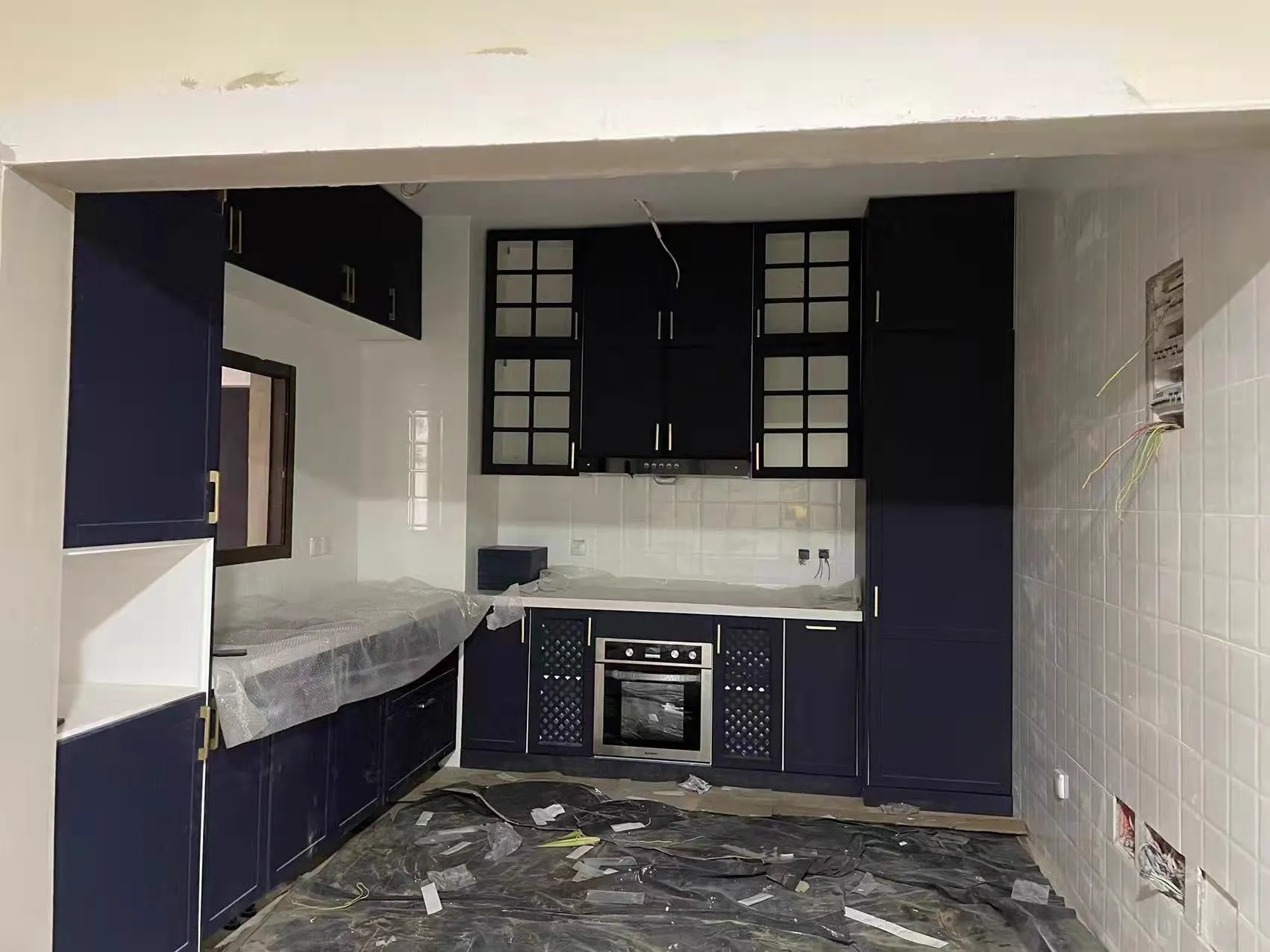
Project reference: on-site installation of a UK Shaker kitchen order. Local fitting is arranged by the project, so plan it before the container arrives.
George Group supplies made-to-order kitchen cabinets from Foshan for UK homes and projects, with coordinated worktops and hardware and the option to consolidate wardrobes, doors, bathrooms and other categories into one shipment. The process follows the checkpoints in this guide: your enquiry pack becomes dimensioned drawings, drawings and samples are approved before production, production is checked against the signed specification, and packing is documented before dispatch. Edge banding carries a ten-year guarantee with free replacement, and every order keeps its approved specification on file for future parts.
The starting point is the same whether you order one kitchen or furnish several properties: send your plan, reference images and delivery postcode through the kitchen cabinets product page, and the first quotation will show which decisions are still open rather than hiding them.
Editorial note: this guide is for preparing specifications and enquiries. Performance, regulatory and documentation requirements depend on your project — confirm them with your architect, installer or building-control adviser before ordering.
Not automatically. UK retail supply is already competitive — Wren's estimator showed a small eight-unit kitchen with three appliances at £3,117–£5,416 supply-only on 21 October 2026. Importing tends to earn its keep when the kitchen is non-standard, when you want coordinated worktops and hardware, or when cabinets ship together with wardrobes, doors or bathrooms in one consolidated order. Compare like for like: cabinets-only against cabinets-only, and always add duty, VAT, freight and local installation to any factory quotation.
Yes. Wooden kitchen furniture falls under HS 940340, which carries a 2% third-country duty into the UK, plus 20% VAT calculated on the goods, freight, insurance and duty. Do not assume the 0% rate that applies to wooden bedroom furniture (HS 940350) — kitchens are classified differently. Rates verified on GOV.UK Trade Tariff, 21 October 2026; confirm the current rate before ordering.
For comparable made-to-order furniture orders, a typical door-to-door window is around 8–12 weeks: production after deposit and drawing sign-off, then sea freight and clearance. That is a planning figure, not a guarantee — your order's specification, production slot and sailing schedule decide the actual timing. If your kitchen is needed urgently, UK retail or trade supply is usually the better route.
Yes — that is the main reason to import. Cabinet widths, drawer arrangements and tall housings are built around your room and appliance list, door colour is matched to your sample or reference, and door construction and worktops are made to order rather than chosen from fixed modules. The approved drawings and finish samples, not a screen image, define what is produced.
Edge banding carries a ten-year guarantee: if it cracks, peels or fails within that period, the affected component is replaced with a new one, free of charge. Full terms — what is covered and how to claim — are confirmed in your order documentation. Keep your order reference: a claim starts with photographs of the affected part, and replacements are made to your original approved specification.
Wall widths measured at low, mid and high level, ceiling height, positions of soil pipes, water, gas and extractor ducts, appliance model numbers, and anything interrupting the run — sockets, radiators, boilers, skirting. Add reference images, your delivery postcode and access notes. Your installer should verify final site measurements before production drawings are signed off.
Flat-pack units use less shipping volume and usually cost less to freight, but need assembly on site. Assembled units arrive ready to position, reducing site labour, but take more container space and need more careful handling. Decide with your installer, taking access, the installation programme and your freight budget into account.
A local installer or kitchen fitter you arrange. Supply from China is a manufacturing and delivery service, not a UK installation service. Involve your fitter early — they should confirm measurements, service positions and the flat-pack versus assembled choice before you approve drawings.
Yes. Consolidating several product categories into one shipment is one of the strongest economic arguments for importing, because freight, clearance and handling costs are shared across the order. Include everything in a single enquiry so packing and shipping can be planned together.
Sloping ceiling wardrobes cost £1,500–£5,999 fitted in the UK. Compare ready-made, specialist and import prices for loft and eaves runs, with worked examples.
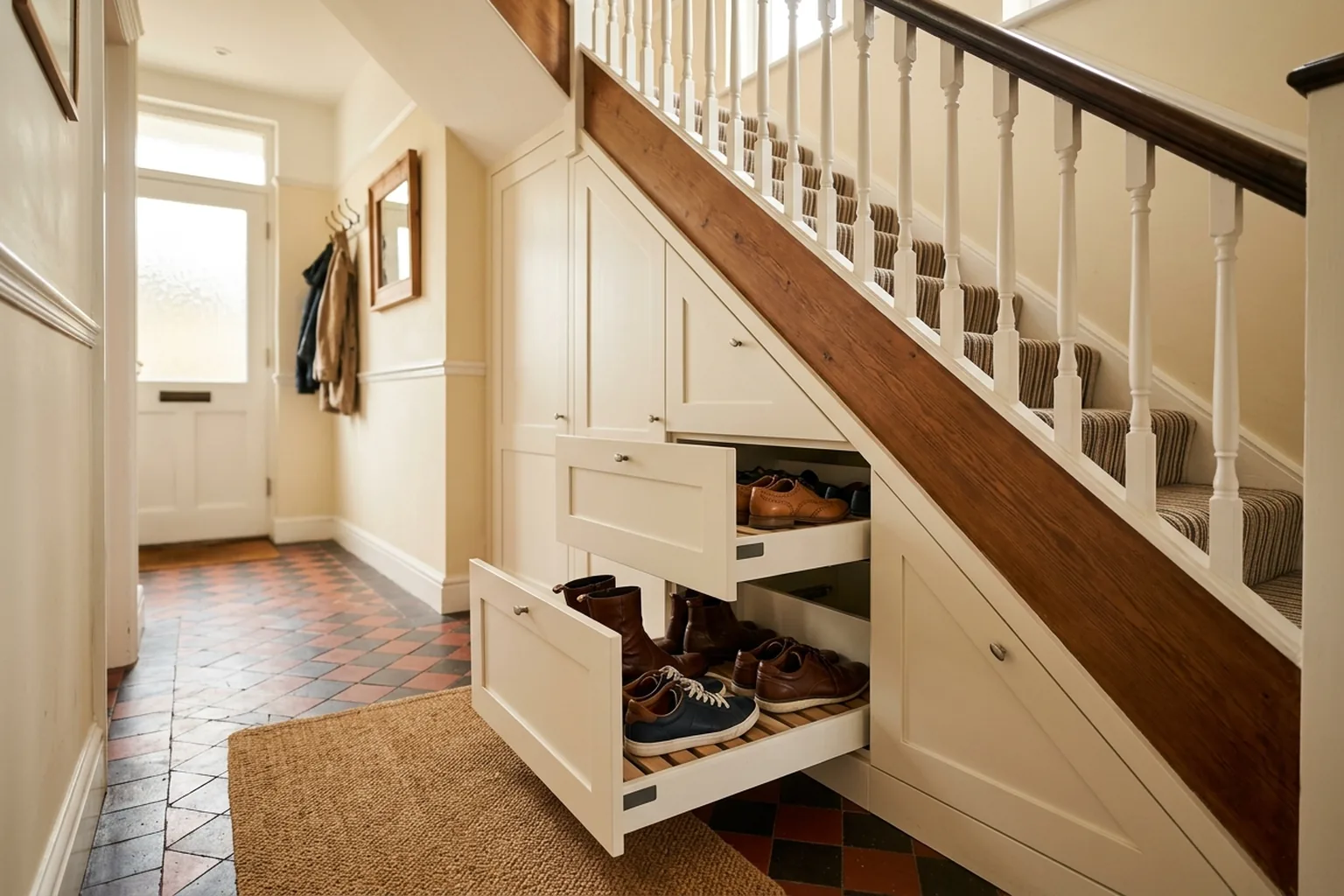
Read the guideUnder stairs storage costs £250–£8,000 in the UK. Compare specialist, joiner and import prices, worked examples, regulations and when importing pays.
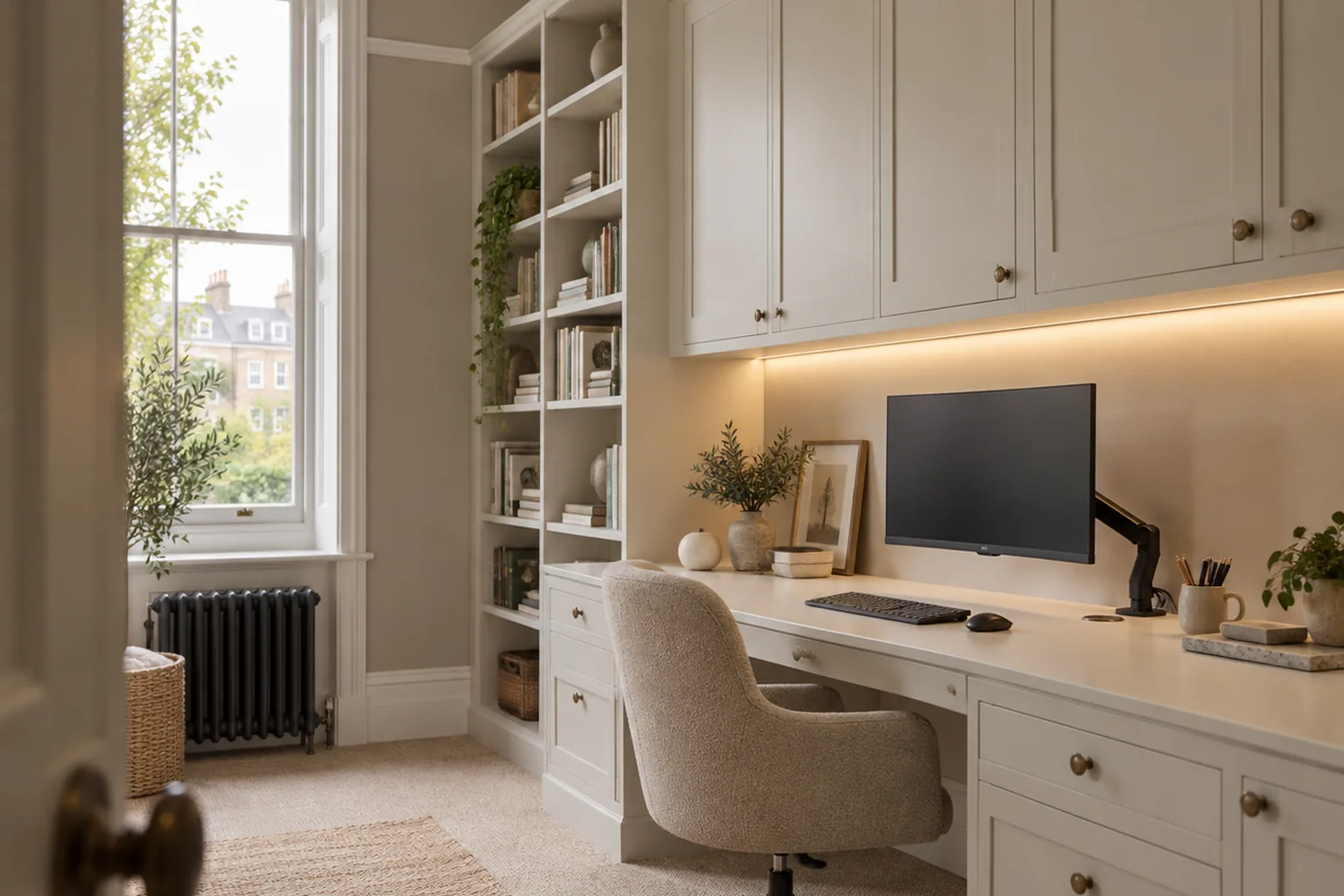
Read the guideUK fitted home office costs: £900–£3,000 for a desk wall, £3,500–£10,000+ bespoke. A 2.4m study wall priced line by line, plus the 2026/27 tax rules.
Read the guideSend your drawings or a short brief — a dedicated coordinator replies with next steps and a consolidated quote.